

Chartreuse through the centre
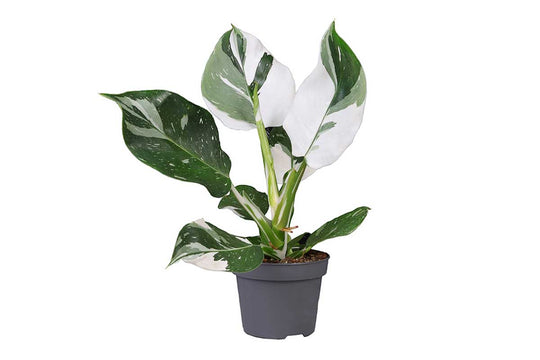
The bright band runs near the midrib without following a perfectly symmetrical edge, keeping each leaf different.
This store requires javascript to be enabled for some features to work correctly.
Jungle… in flag colours 💚💛
Family: Araceae · Pot diameter: 12 cm · Height: 15–20 cm
Philodendron hederaceum ‘Brasil’ paints each heart-shaped leaf with an irregular chartreuse-and-yellow band over deep green. The pattern recalls the colours of the Brazilian flag and shifts slightly with every new leaf.
The juvenile silhouette of Philodendron hederaceum ‘Brasil’ stays clean and flexible, while successive nodes gradually reveal larger, more mature leaves as the stem climbs.
The cultivar pairs the familiar P. hederaceum heart with a bright central brushstroke and flexible growth.
The bright band runs near the midrib without following a perfectly symmetrical edge, keeping each leaf different.
Two basal lobes and a pointed tip create the classic heartleaf philodendron silhouette.
Without support it trails; against a vertical surface it develops a more organised climbing line.
Why you’ll love it: it delivers bright lime colour with the versatility of a classic heartleaf philodendron.
Near a bright window with a slim support or moss pole so the nodes can climb and the leaves can mature. Leave breathing room around the crown so each leaf shape reads clearly.
Choices with compatible light needs and contrasting textures keep the arrangement balanced.
Bright, indirect light. Variegated forms need steady light without harsh sun.
When the top 2–4 cm are dry. Water thoroughly and let all excess drain away.
Moderate to higher humidity and roughly 18–29°C, away from cold or hot draughts.
Not safe to chew. It contains insoluble calcium oxalate crystals.
Keep it near an east-facing or bright north-facing window, or behind a sheer curtain. Low light reduces leaf size and variegation, while harsh sun can scorch pale tissue.
Check the mix before every watering and wait until the top 2–4 cm are dry. Water evenly, let it drain and never leave water standing in the cover pot.
It adapts to average household humidity, but steady humidity and gentle air movement support cleaner edges and smoother unfurling.
An ideal range is roughly 18–29°C. Avoid cold glass, air-conditioner draughts and sudden changes that slow growth.
Use an airy aroid mix with ample pore space around the roots and moderate moisture retention. Unrestricted drainage is essential.
During active growth, use a balanced liquid feed at the label rate and only on already moist substrate. Repot when roots fill the pot, moving up by one size.
Philodendron hederaceum is an accepted Araceae species native from Mexico through tropical America, living epiphytically or climbing in wet forests.
‘Brasil’ arose as a whole-plant mutation in cultivated Philodendron scandens subsp. oxycardium, a name now included within P. hederaceum.
The mutation was discovered in 1991 in Holambra, Brazil, by Ruben Ernesto Acosta and was later protected in the United States as PP12,956.
Chartreuse and yellow zones contain less chlorophyll than deep green tissue. The plant needs balanced light: enough to support the pattern, not so harsh that pale tissue scorches.
When a stem finds support and good light, successive blades can grow larger. Trailing culture usually retains a smaller, finer form.
Nodes can produce leaves, buds and aerial roots. When they meet a stable, lightly moist support, they help the stem climb without replacing the root system in the pot.
Philodendron tissues contain needle-like calcium oxalate crystals. Chewing releases them and can cause immediate pain, irritation and drooling.
Practical answers about growth and the plant’s most common signals.
Expression varies by leaf, but low light can produce greener growth. Move the plant gradually into brighter indirect light and assess several new leaves before pruning.
One old lower leaf may be ageing normally. Several yellow leaves at once call for a check of moisture, drainage, light and roots before adding water or fertiliser.
Climbing forms benefit from a firm pole or moss surface, while self-heading rosettes mainly need room. Tie only the stem, never a leaf petiole.
Low or abruptly changing humidity, a dry root zone or cold can hinder unfurling. Stabilise conditions and never pull a soft blade from its sheath.
On climbing forms, cut a healthy section with at least one node and a viable growth point. Self-heading forms will not propagate from a plain leaf without a node.
Not for chewing or ingestion. Insoluble calcium oxalate raphides can cause severe oral irritation. Keep it out of reach and seek professional advice if ingestion or symptoms occur.