
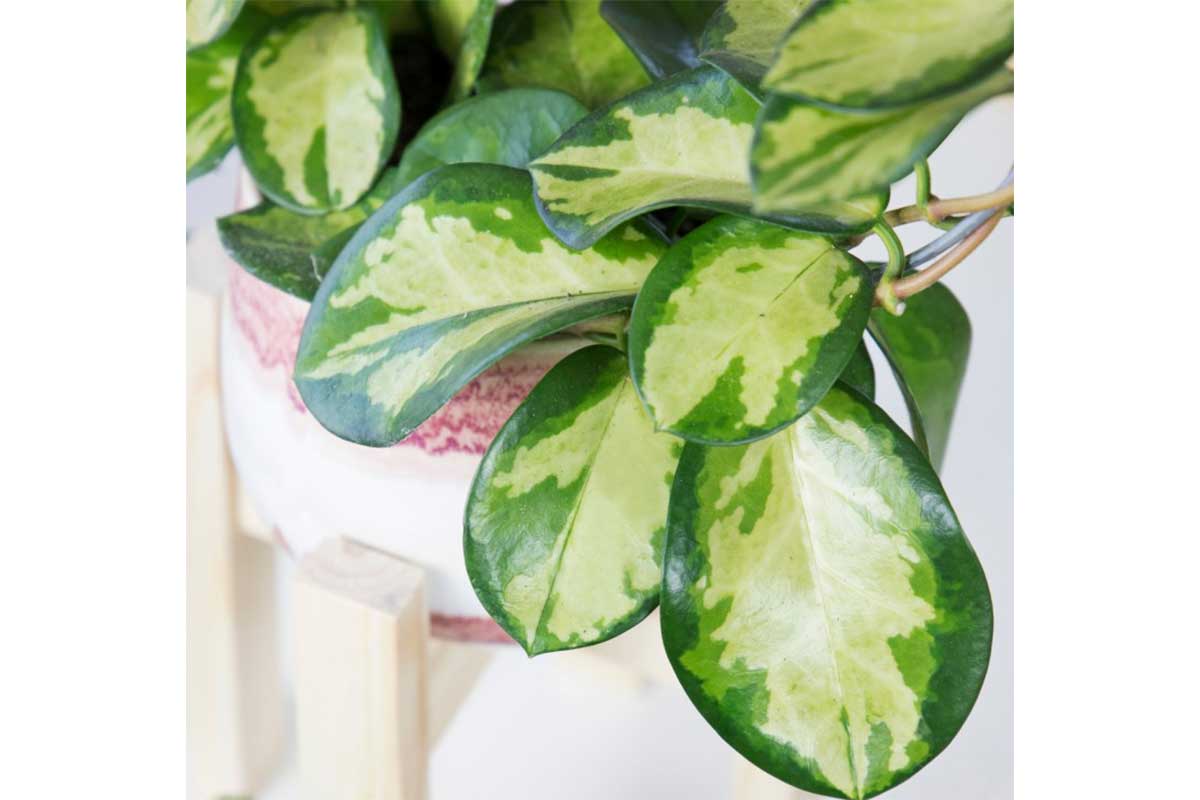

Central variegation
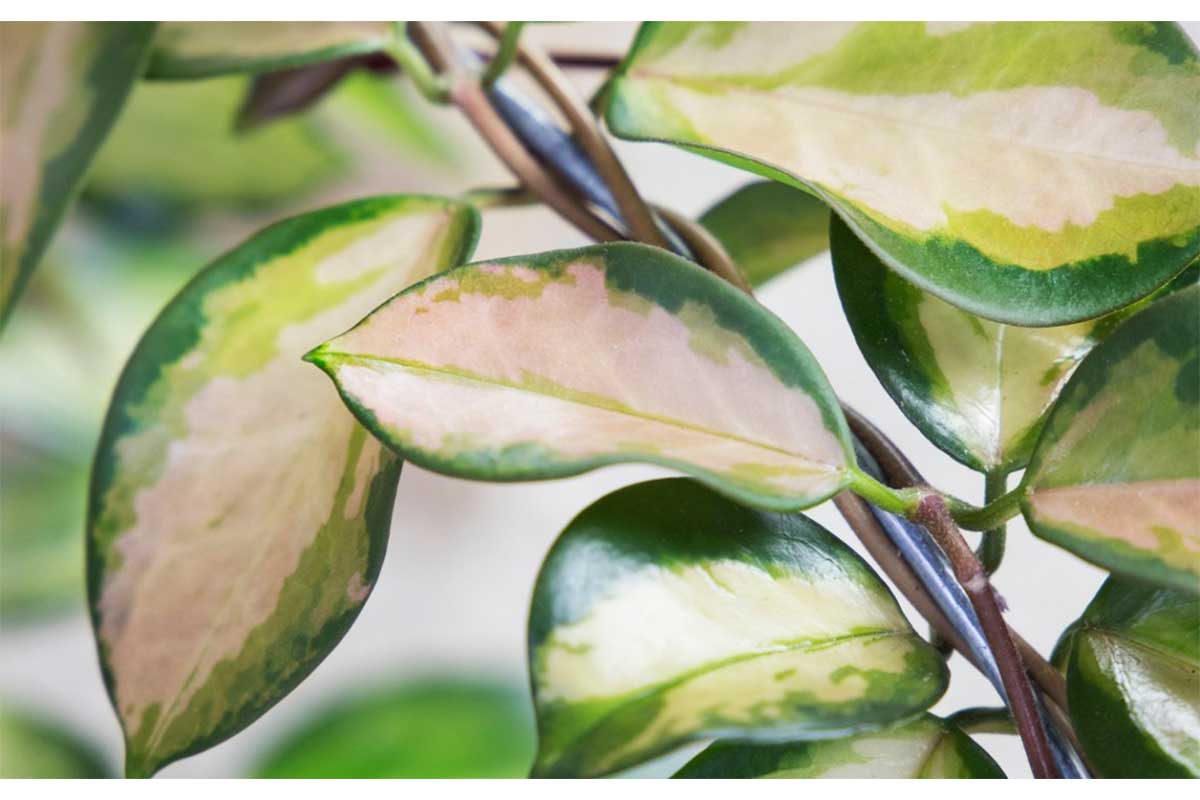
Lime and cream zones appear within the green blade in different proportions on every leaf.
This store requires javascript to be enabled for some features to work correctly.
A little light, a little water… then it starts opening up to you 😏
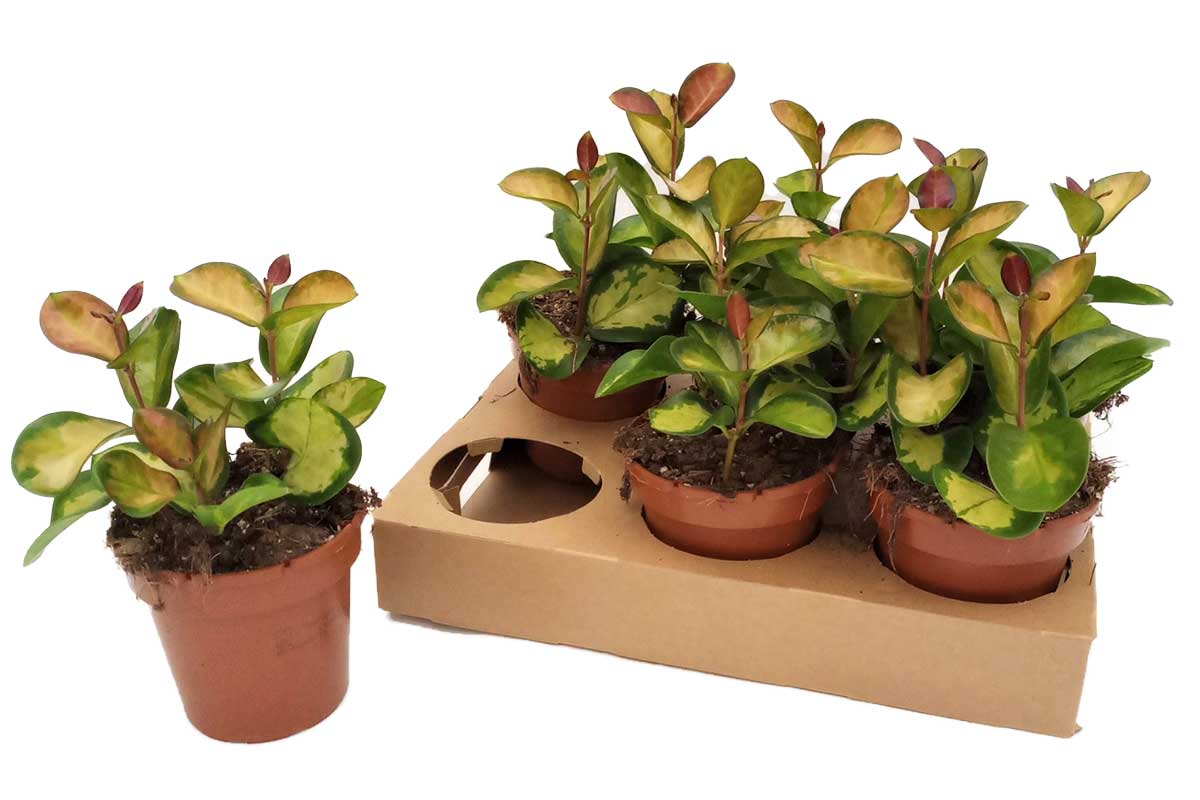
Family: Apocynaceae · Pot diameter: 12 cm · Height: approx. 20 cm · 3 plants/pot
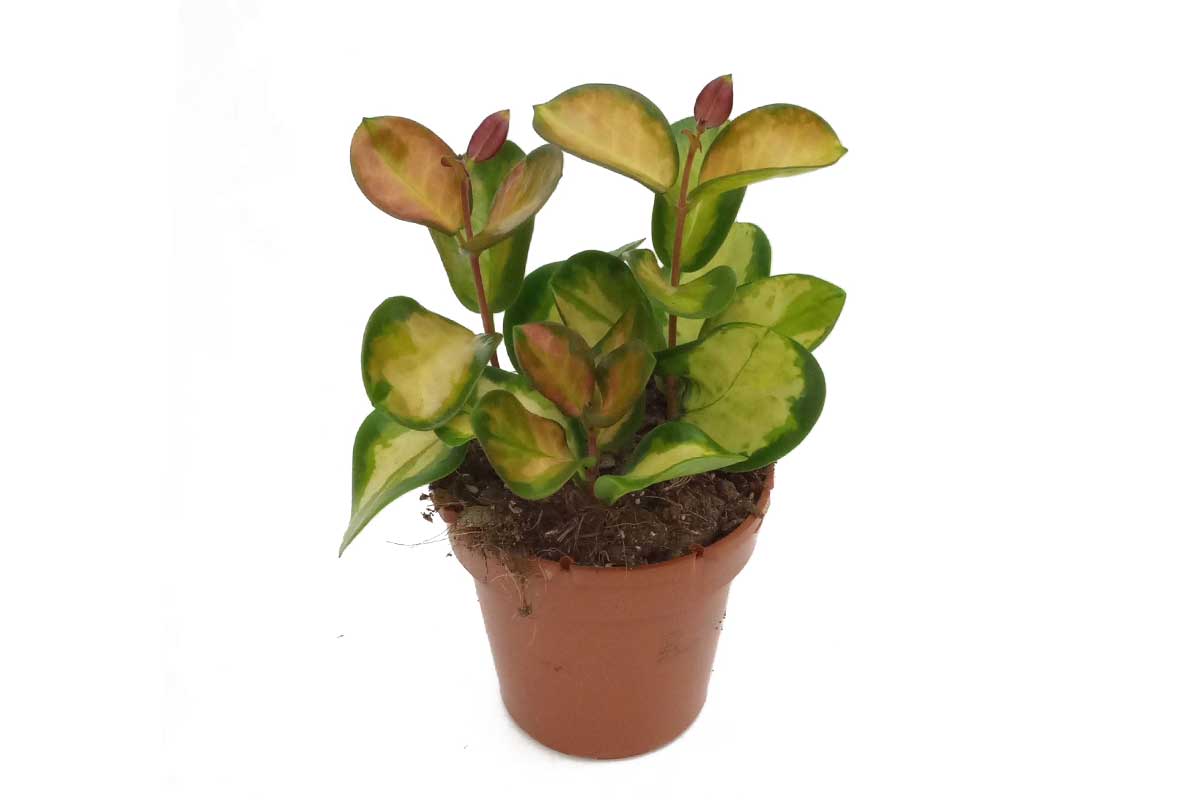
Hoya australis ‘Lisa’ combines broad glossy leaves with irregular lime and cream zones, while young growth can open in warm pink tones.
Three plants in one pot give an immediately full base and more climbing tips without changing the need for an airy substrate.
Internal variegation, a pink transition and a multi-planted base give ‘Lisa’ rich colour without a heavy silhouette.
Lime and cream zones appear within the green blade in different proportions on every leaf.
Tender blades can begin pink or bronze and change as they mature.
The multi-planted pot creates a full appearance sooner and allows stems to be directed in different ways.
Why you will love it: it brings warm variegation and generous volume to a small pot, with foliage that changes character from emergence to maturity.
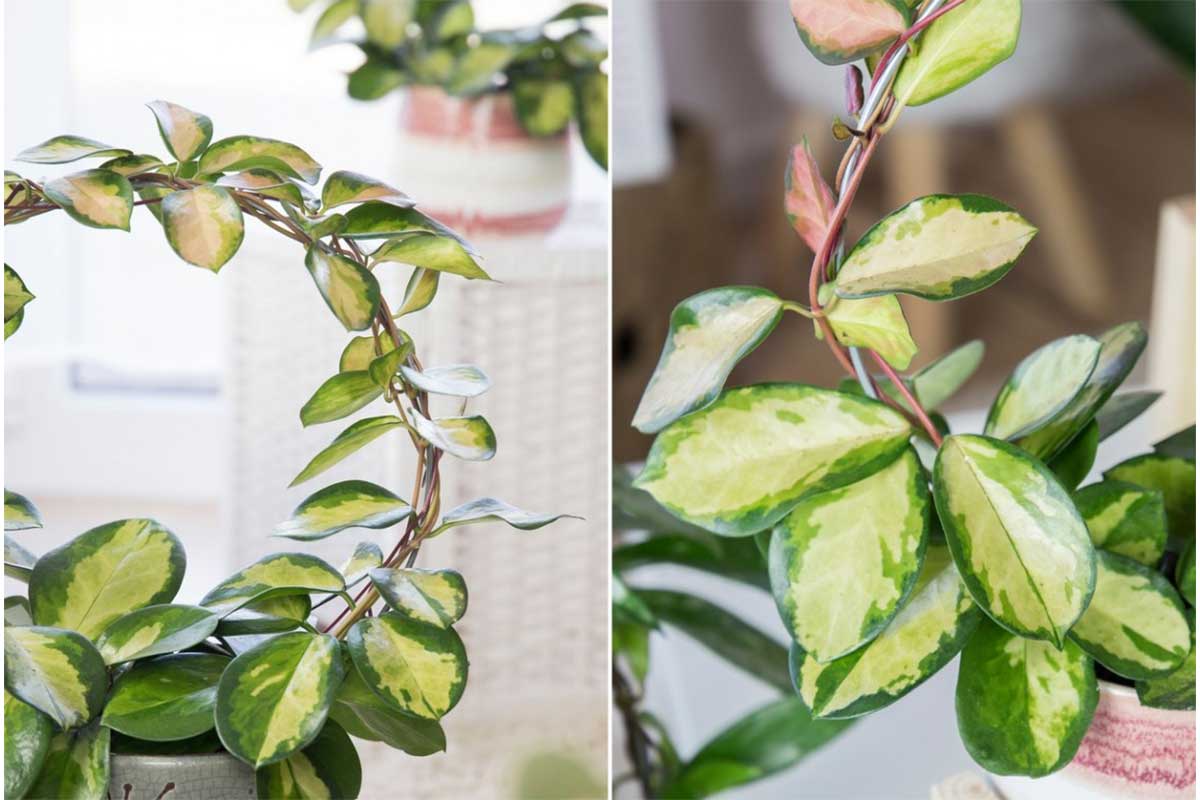
Give it a slim hoop or discreet trellis near a bright window and guide new stems loosely without tight ties. Natural wood, terracotta and dark ceramic emphasise its epiphytic character.
Pair it with other epiphytes that enjoy aerated roots and bright filtered light while changing the foliage silhouette.
Very bright filtered light. Gentle morning or late-afternoon sun after gradual acclimation.
Water thoroughly once most of the mix has dried. Never leave water standing around the roots.
Keep at 18–27°C with moderate to raised humidity and good airflow; protect below 15°C.
Hoyas are generally regarded as non-toxic to cats and dogs, although species-specific data are limited for less-studied taxa. Discourage chewing.
Place it near an east- or west-facing window or behind a sheer curtain. Ample light supports compact growth and potential flowering, but abrupt hot sun scorches foliage.
Water evenly and let excess escape, then wait until most of the airy mix has dried. Fleshy tissues tolerate brief dryness better than permanent saturation.
Moderate to raised humidity supports roots and new growth, especially in small pots. Gentle air circulation is essential so leaves and nodes do not stay continually wet.
Keep at 18–27°C and above 15°C. Let stems trail or guide them gently around a hoop without tight ties that damage the active tip.
Use a highly aerated Hoya mix with coarse components and immediate drainage. Repot infrequently and increase the container only slightly once the root ball has genuinely filled it.
During active growth, use Nutri One, a complete liquid NPK feed with trace elements, only as directed and never on bone-dry mix. After repotting into a fresh enriched substrate, wait before feeding so nutrition is not needlessly doubled.
Hoya australis is an accepted species in the Apocynaceae. ‘Lisa’ is a cultivated variegated selection of the species and is maintained clonally from cuttings.
Hoya australis is native from northern Borneo, Sulawesi and New Guinea to the south-western Pacific, growing as an epiphyte in tropical environments.
‘Lisa’ is widely recognised in cultivation by its internal variegation. A breeder or crossing history has not been published with the name.
Hoyas often evolved on trunks or rocks where water and air alternate quickly, explaining their need for a coarse, aerated mix.
The waxy flower typically has a five-part corolla and a second star-shaped corona in the centre, creating its characteristic double geometry.
As in many Apocynaceae, pollen is organised into pollinia joined in a specialised pollinarium rather than released as loose dust.
Pale zones contain less chlorophyll, so the plant relies more heavily on green tissue. It needs abundant indirect light, not excessive feeding that softens new growth.
Practical answers about behaviour, common signs and correct care for this plant.
Pink is often juvenile anthocyanin pigment and recedes with maturity. Judge the final variegation only once the blade has fully hardened.
Check deep in the mix and feel the pot's weight. Water when most of the substrate is dry and the container is noticeably lighter, then drain completely.
Not if they are healthy. The planting is designed for fullness and can remain together; separate only for deliberate propagation or when a confirmed root problem requires intervention.
Flowering depends on maturity, light intensity, stable care and species. Increase bright filtered light gradually and avoid overfeeding; a young plant may simply need time.
Not while they remain alive. Many Hoyas bloom again from the same persistent peduncle, so remove only tissue that is dry or clearly damaged.
Commonly grown Hoyas are generally listed as non-toxic, but equally detailed evidence is not available for every uncommon species or cultivar. Keep the plant from habitual chewing because a large amount of any plant material can still cause stomach upset.