



This store requires javascript to be enabled for some features to work correctly.
 THE LIVING GALLERY
€4,50
Normal price €3,60The legal guarantee concerns the plant’s conformity at delivery. It is not a guarantee of survival or growth for two years. Each issue is assessed taking into account the nature of the plant, its care and the conditions in which it is kept. Your statutory rights remain unaffected.
A blue rosette with a pink signature along the edges 🩵
Echeveria 'blue bird' unfolds into an almost perfect rosette of broad, gently curved leaves in blue to silver-green tones. A naturally powdered surface creates a velvety finish, while the pink edging acts like a fine signature defining every leaf. The meeting of cool blue and warm pink produces an exceptionally elegant image that feels romantic, clean and contemporary at the same time.
As the rosette fills out, overlapping rows gain greater depth and the symmetry becomes even more impressive, resembling a large sculpted flower. Colour gradients move naturally through blue, silver, green and pink, offering a subtly changing appearance across the year. It is a highly photogenic and desirable succulent, excellent as a distinctive gift or as a luminous, refined addition to a rosette collection.
Three details that turn its botanical identity into genuine presence for a collection and interior or outdoor setting.
Epicuticular wax softens colour and creates its characteristic porcelain texture.
High light and cool nights enhance anthocyanins without dangerous dehydration.
Its accepted cultivar name and stable form explain its lasting popularity.
Why you will love it: it combines cool blue, delicate pink and precise symmetry in a rosette that looks luxurious without becoming difficult.
Place it close to east- or south-facing glass with gentle morning sun and gradual acclimation to stronger light. A low white, lilac, grey or terracotta pot lets it be viewed from above. Avoid touching leaves and do not hide it behind taller plants.
Pair it with plants that genuinely share its light, substrate and seasonal rhythm. Separate pots keep care precise for every plant.
Very bright light with gentle direct sun after gradual acclimation.
Water at root level after thorough drying, keeping water out of the rosette.
Dry air, circulation and protection from frost or scorching enclosed glass.
Echeveria are not generally considered highly toxic, but they are not food plants. Prevent chewing by children or animals.
High light maintains a dense rosette and strengthens pink margins. Abrupt exposure to hot summer sun burns bloom and epidermis, so increase it gradually.
Water deeply at the base and let excess drain. Repeat when the pot feels light and the mix is dry at depth; never leave water in the centre or between leaves.
Ordinary low humidity is suitable with airflow. Misting marks the bloom and increases rot risk between leaves.
It may slow in extreme summer heat and low winter light. Adjust water according to new growth rather than a fixed schedule.
Use an open succulent mix with a high mineral fraction and a pot only slightly larger than the roots.
Apply diluted low-nitrogen feed only while new leaves form; with fresh Sybasoil, wait about two months.
The name Echeveria ‘Blue Bird’ is recorded as an accepted cultivar name. Identity remains at genus level without an arbitrary species epithet.
The official record inspected does not provide a breeder, year or parents. Frequent attribution to Frank Reinelt is not treated as proven primary evidence.
The cross E. colorata × E. desmetiana is widely repeated but was not verified in the official record. It is presented as possible rather than certain parentage.
From natural habitat to care: ‘Blue Bird’ has no separate natural habitat because it is a cultivated selection. Care follows Echeveria morphology: fleshy water-storing leaves, protective bloom, a rosette needing airflow, high light and a complete dry-down before watering again.
It reflects radiation and reduces water loss, but fingerprints remain.
Successive leaf angles reduce self-shading and create symmetry.
Pigments strengthen under high light and cool conditions; dry brown tissue is scorch, not desirable colour.
Offsets and cuttings preserve the selected form; seedlings cannot automatically be named ‘Blue Bird’.
Useful answers about light, watering, seasonal rhythm and the plant’s correct identity.
High light maintains a dense rosette and strengthens pink margins. Abrupt exposure to hot summer sun burns bloom and epidermis, so increase it gradually.
Water deeply at the base and let excess drain. Repeat when the pot feels light and the mix is dry at depth; never leave water in the centre or between leaves.
The attribution is widely repeated but was not confirmed in the official RHS record inspected. It is noted only as a possible history.
With gradually stronger light, cooler nights and moderate feeding. Do not force dehydration or scorch for colour.
Use an open succulent mix with a high mineral fraction and a pot only slightly larger than the roots. Apply diluted low-nitrogen feed only while new leaves form; with fresh Sybasoil, wait about two months.
Echeveria are not generally considered highly toxic, but they are not food plants. Prevent chewing by children or animals.
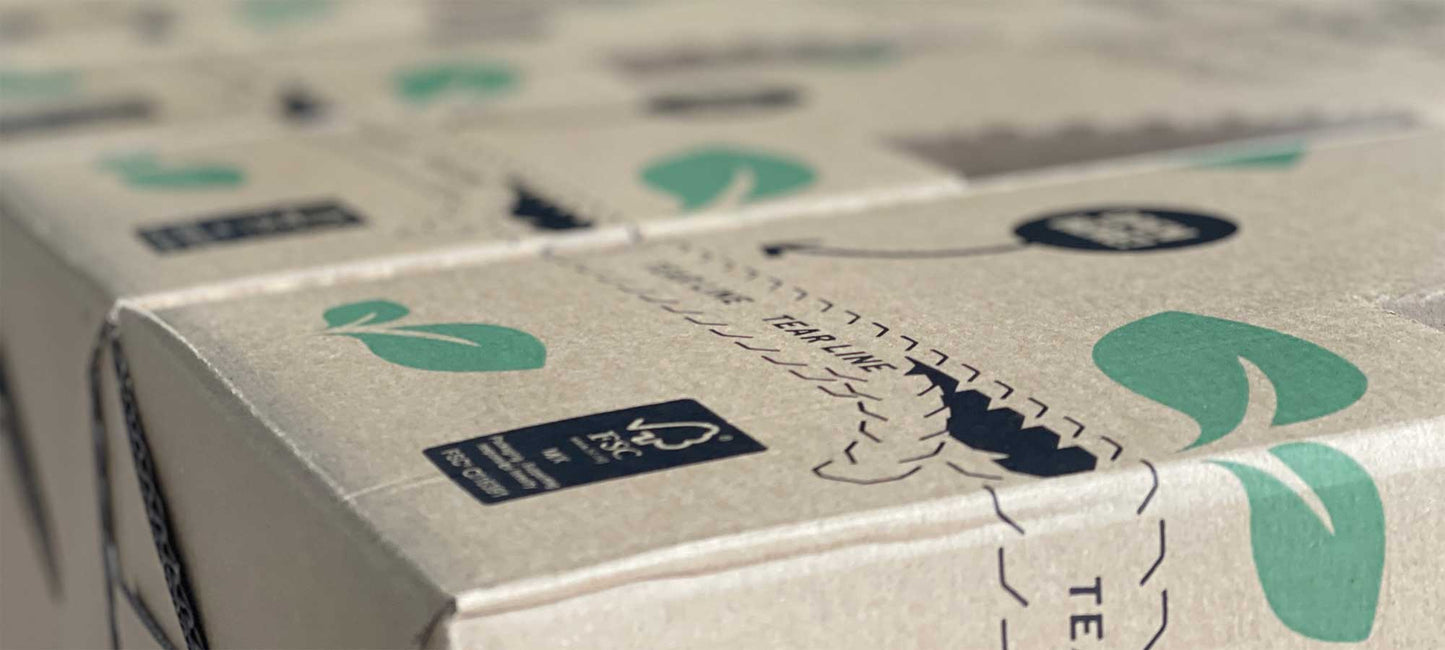
Every order is prepared with care so your plant arrives upright, secure and safe.
Individual protection
Plants in pots with a capacity of 3 litres or more are placed in individual boxes that hold the pot securely and reduce the risk of tipping over.
Sturdy packaging
We use reinforced cardboard designed to protect against impacts and vibration during transport.