

Form
Broad heart-shaped blades open from a compact crown and develop an imposing firm silhouette.
This store requires javascript to be enabled for some features to work correctly.
It isn't merely rare — you search for it, and it keeps avoiding you 👻
Family: Araceae · Pot diameter: 10.5 cm · Height: 15 cm
Anthurium papillilaminum is a dark botanical heart that appears carved from velvet. Broad blades open in deep green, often nearly black, and are crossed by bright veins creating strong depth and dramatic geometry. It needs no flowers to take centre stage: even a young rosette reads like a rare collectable object on a stand, calm shelf or against a neutral wall where the foliage can reveal all its mysterious texture.
The surface absorbs much of the light, making the veins look like fine lines over dark fabric. With stone, matte black or warm wood it gains an almost museum-like presence, while each developing blade adds a different heart to the composition and keeps the display compelling.
Near-black velvet, bright venation and a powerful heart shape create exceptional collectable drama.
Broad heart-shaped blades open from a compact crown and develop an imposing firm silhouette.
Deep green to near black frames silver-green primary and lateral veins.
The matte, thick velvet appearance absorbs light and creates the visual feel of leather or fabric.
Why you’ll love it: it resembles a rare dark jewel, with every bright vein engraving a striking green heart.
On a plant stand or broad side table where the rosette has room to open. A plain pot in cream, charcoal or deep green keeps attention on the foliage’s changing colours.
Choices with compatible light needs and contrasting textures keep the arrangement balanced.
Plentiful bright filtered light, without harsh direct sun.
Water as the upper portion begins to dry and let all excess escape.
Moderate to higher humidity, clean airflow and roughly 18–27°C, without cold draughts.
Not safe for chewing or ingestion because of insoluble calcium oxalate crystals.
Provide strong filtered light so the dark velvet and bright veins remain clear. Harsh sun can leave permanent marks.
Check below the surface and notice the pot's weight. Water evenly as the upper portion begins to dry, then allow immediate drainage.
Combine moderate to higher humidity with gentle airflow. Stagnant air and foliage that stays wet encourage spotting.
Maintain roughly 18–27°C and keep it away from cold glass, air conditioning and heaters. Abrupt changes hinder new leaves as they unfurl.
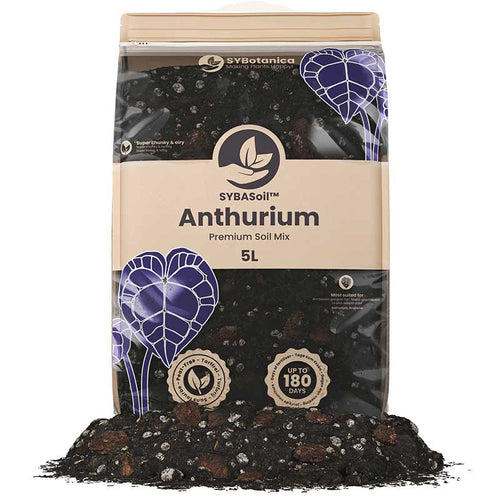
Use the specialised Anthurium mix so fine roots receive moisture and oxygen without compaction. Keep the crown at the same level when repotting.
During active growth use Liquid Gold Leaf according to the label, always on already moist mix. Reduce it when growth slows.
Anthurium papillilaminum is an accepted species native to Panama.
It grows as a terrestrial subshrub in wet tropical forest, close to an organic surface with steady moisture and good oxygenation.
The epithet refers to the finely textured blade surface, one of the elements creating its velvet appearance.
From natural habitat to care: Terrestrial growth in loose forest organic matter explains the need for gentle steady moisture combined with ample air around the roots.
Microscopic irregularities in the epidermis scatter light and prevent the blade from acting like a glossy mirror.
Primary and lateral veins support the large surface while transporting water and photosynthetic products.
While unfurling it is soft and often differently coloured, then hardens and gains its final deep green.
Insoluble calcium oxalate crystals cause marked irritation if plant tissue is chewed.
Practical answers about growth and the plant’s most common signals.
New blades change colour as they unfurl and harden. Leave them untouched until they gain their final deep shade.
Very low light can reduce contrast, while harsh sun can bleach or mark the blade. Improve the position gradually.
One old lower leaf may age naturally. Several at once call for checks of moisture, drainage and roots before adding water.
Use a very soft dry brush or a barely damp cloth without pressure. Do not apply leaf-shine products.
When roots have genuinely filled the pot or the mix has lost its porous structure. Move up one size only.
Not for chewing or ingestion. Insoluble calcium oxalate raphides can cause marked oral irritation.