



Fewer assumptions
The decision to water is based on the moisture existing near the roots and not just on the surface appearance.
This store requires javascript to be enabled for some features to work correctly.
 THE LIVING GALLERY
Shipping within Greece only. This product cannot be shipped to your selected country.
Shipping within Greece only. This product cannot be shipped to your selected country.

The practical tool that turns watering uncertainty into a clear indication. With a single measurement near the root ball, it shows whether the soil is dry, properly moist, or overly wet — particularly useful when the surface of the planter doesn't tell the whole truth.
For plants in a planter with potting soil or compost around the root ball.
The surface may appear dry while deeper down there is still enough moisture. The thin rod is inserted into the soil around the root ball, and the scale is read while the meter remains inside the planter.
The decision to water is based on the moisture existing near the roots and not just on the surface appearance.
Regular measurement helps avoid both water shortage and excessively frequent watering.
Ideal for large pots, deep planters, and plants that have not yet fully rooted after repotting.
The three colors translate the measurement into a direct image of soil moisture.
Watering is needed, always in accordance with the specific plant's needs.
The soil has enough moisture and does not require immediate new watering.
Pause watering and allow the substrate to lose some of its moisture.
The scale is read within the soil, but the meter does not remain permanently in the planter.
Find soil close to the root ball, without pressing the rod onto thick roots.
Guide it carefully into the soil so that the tip reaches the root zone.
Check the color while the rod is still inside the planter.
Remove the meter immediately and clean the tip only with a dry cloth.
In a new LECHUZA planting, before the root system fully utilizes the reservoir, measuring around the root ball helps determine the plant’s dry phase more accurately.
It can be used in any indoor or outdoor planter, provided the measurement is made in conventional potting soil or compost around the root ball.
A complete care tool, ready for immediate use.
Not included planter, plant, or other care accessories.
The meter gives a correct reading when the probe is placed in potting soil or compost around the root ball. It is not suitable for pots containing exclusively pure mineral substrate, such as LECHUZA-PON. Prolonged exposure to water or wet substrate can also oxidize the probe and affect the measurement.
The Moisture Meter and the Watering Indicator check moisture in different ways and serve different needs.
The Moisture Meter is a portable tool for instant checking in different planters with regular soil. If you want a permanent indicator that stays in the planter and works in soil, PON, and mixtures, choose the Watering Indicator.
See the Watering Indicator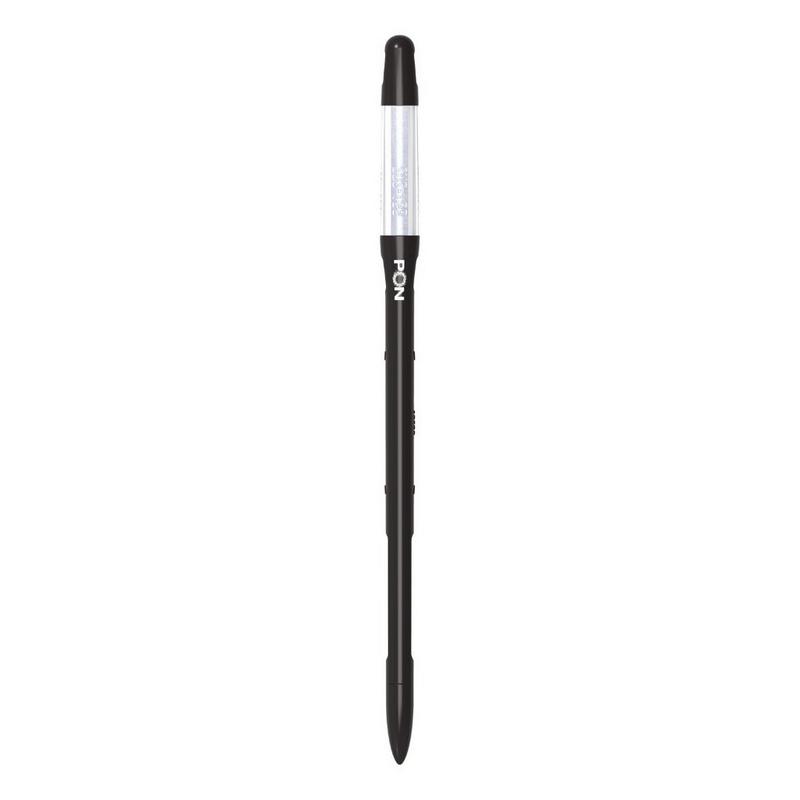
Two different tools for two different sides of daily care.
The Moisture Meter checks the moisture in the soil. For leaf care, the Organic Leaf Shine helps remove dust and water salts from the leaves with a very fine spray.
See the Organic Leaf ShineRed indicates that the soil is very dry and needs watering, green indicates it has sufficient moisture, and blue indicates it is too wet and needs a pause from watering.
Insert it carefully into the soil around the root ball, so that the measurement concerns the moisture received by the roots and not just the surface of the planter.
No. Read the indicator while the rod is in the soil, then immediately remove it and wipe the tip with a dry cloth. Prolonged contact with moisture may cause oxidation and incorrect readings.
No. For correct indication, the tip must be in conventional potting soil or compost around the root ball. The meter is not suitable when the planter contains exclusively pure mineral substrate, such as LECHUZA-PON.
Yes. It is suitable for plants in conventional soil, both in LECHUZA pots and in standard planters, indoors or outdoors.
No. The LECHUZA Moisture Meter works without batteries, charging, or any other power source.
No. The water-level indicator shows the water inside the water reservoir, while the Moisture Meter checks the moisture of the soil around the root ball. It is especially useful after repotting, in large pots, or when the surface of the soil is misleading.
© Original product description by Greenleaf Garden Center. All rights reserved. Copying is prohibited.