
Form
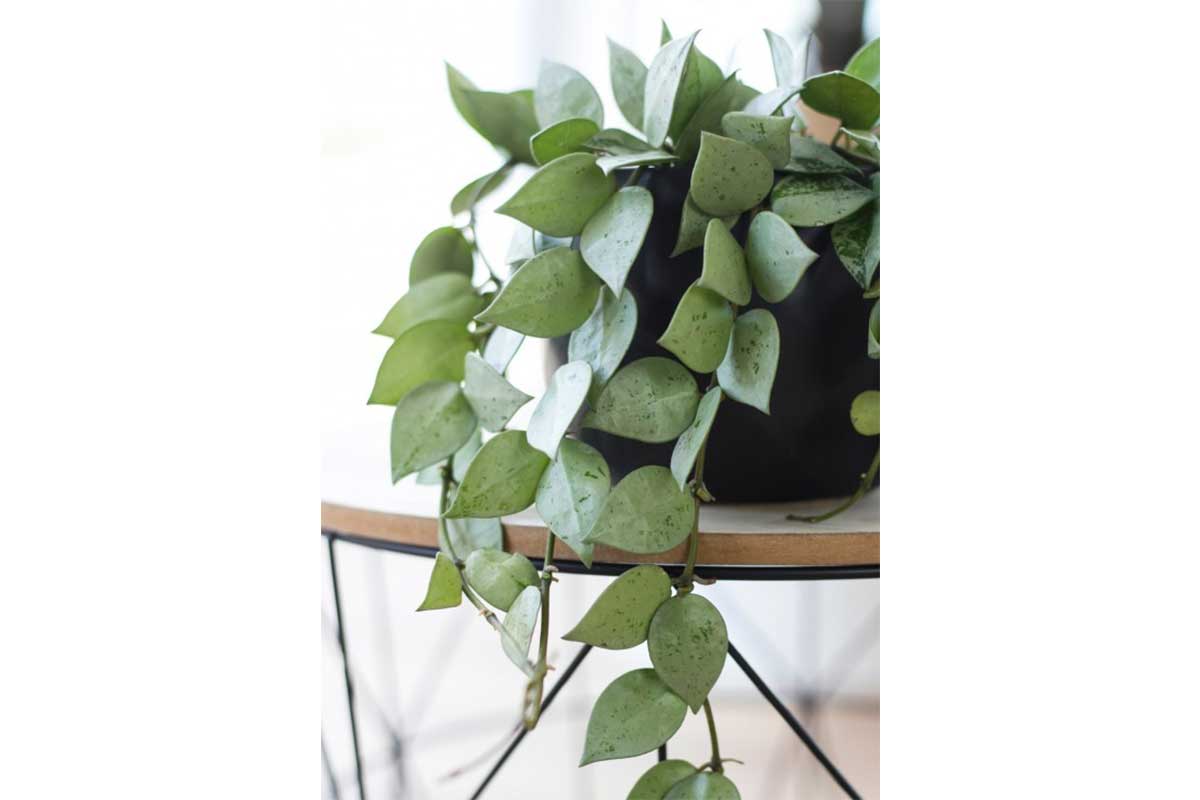
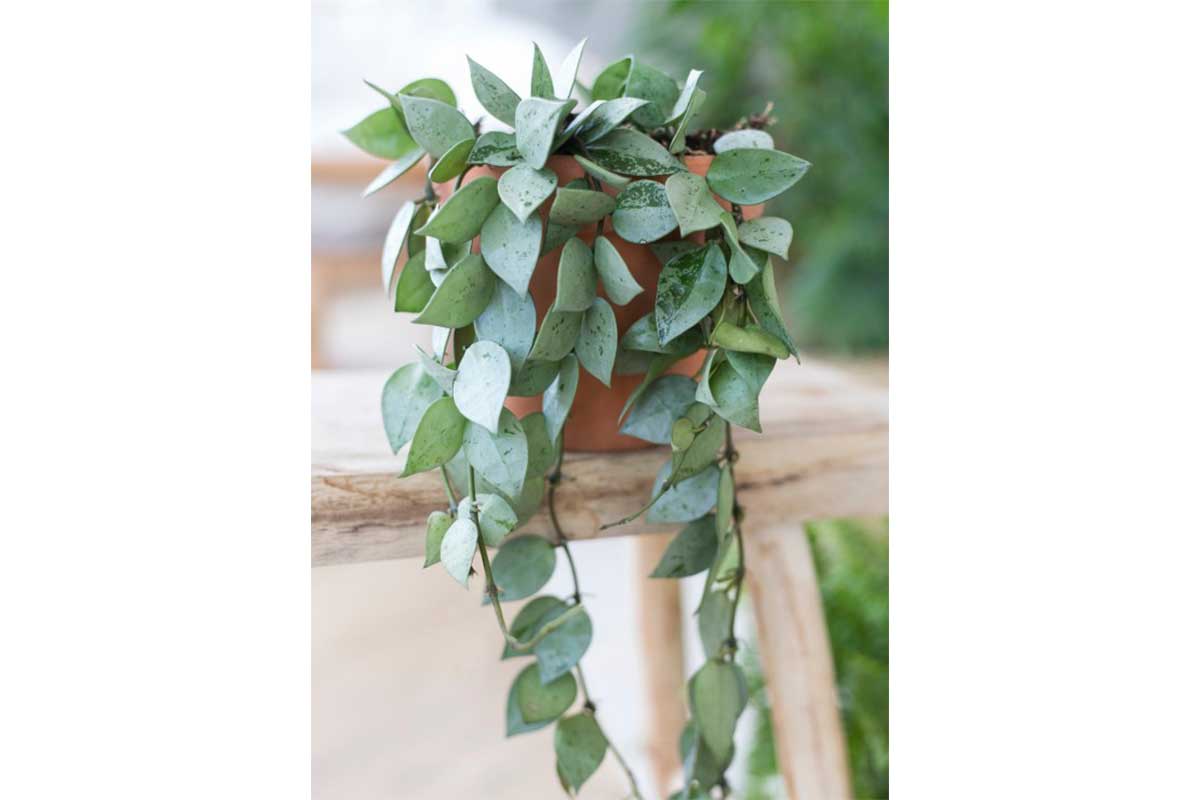
Fine stems carry small blades at close intervals, creating a flexible cascade.
This store requires javascript to be enabled for some features to work correctly.
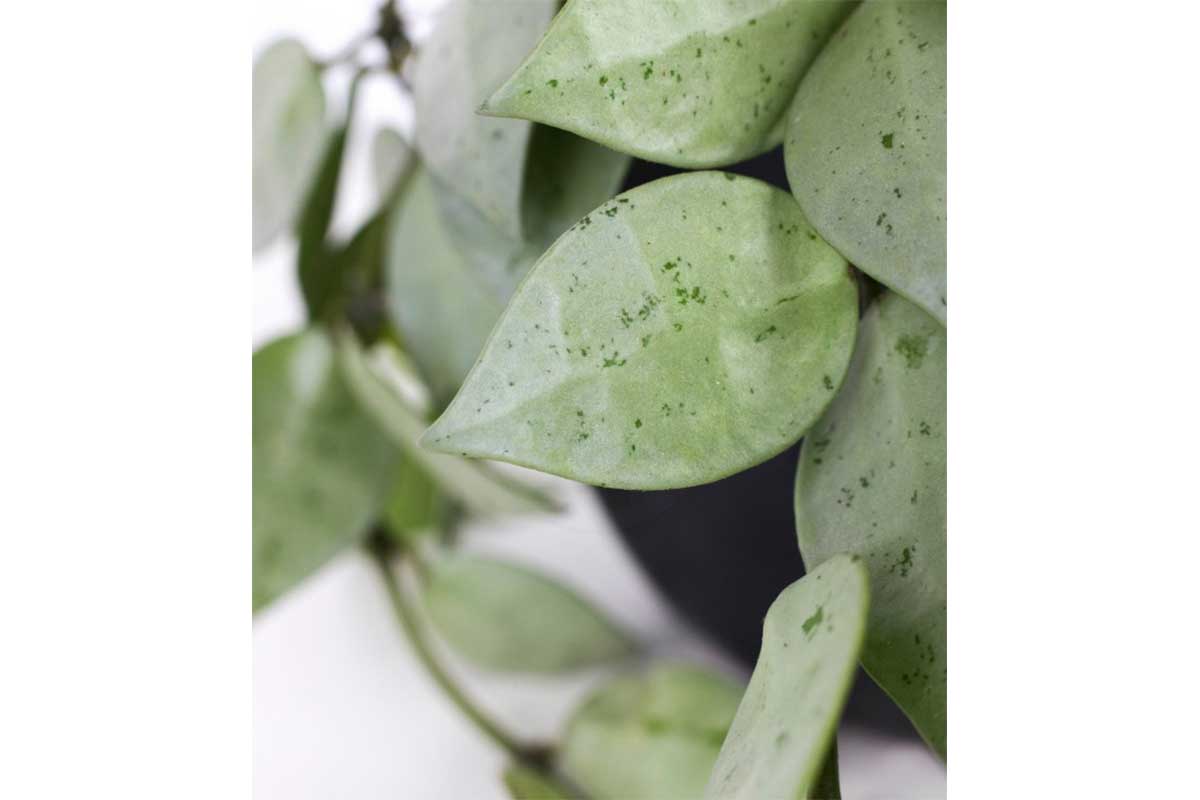
If you think all Hoyas look alike… zoom in 🧐
Family: Apocynaceae · Pot diameter: 12 cm · Height: approx. 10 cm
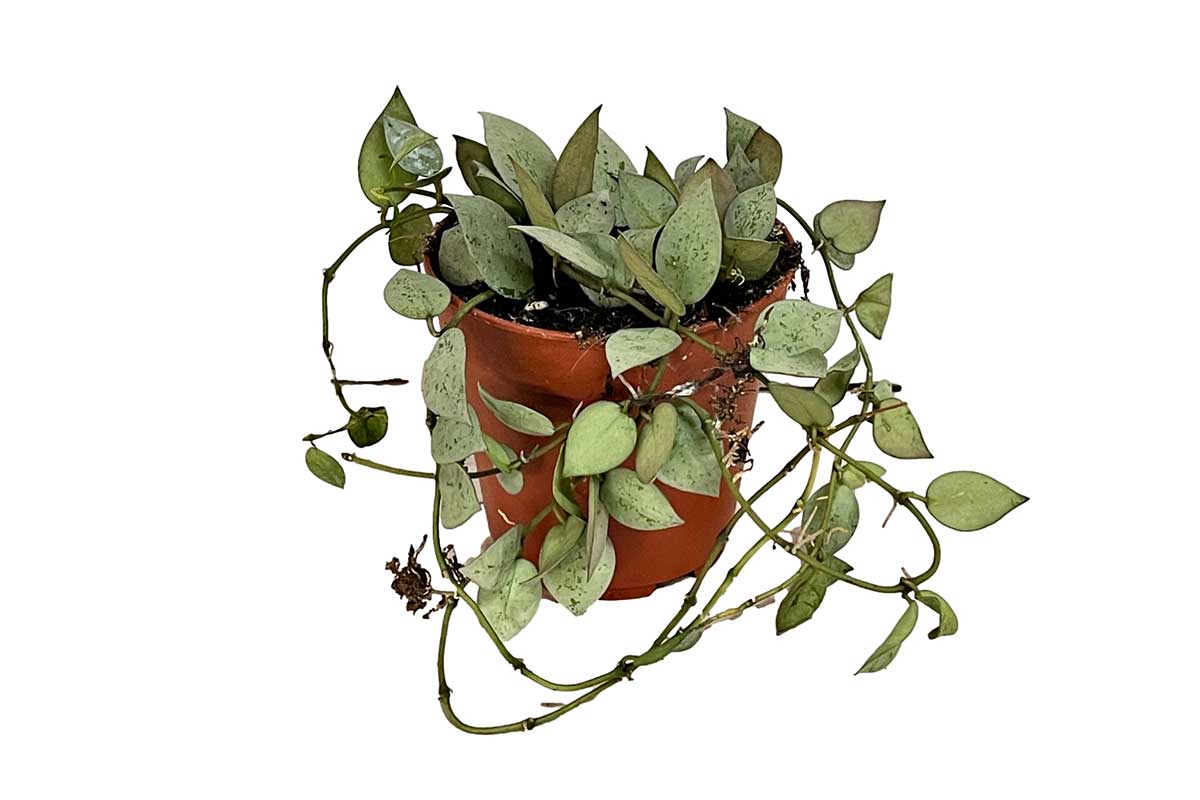
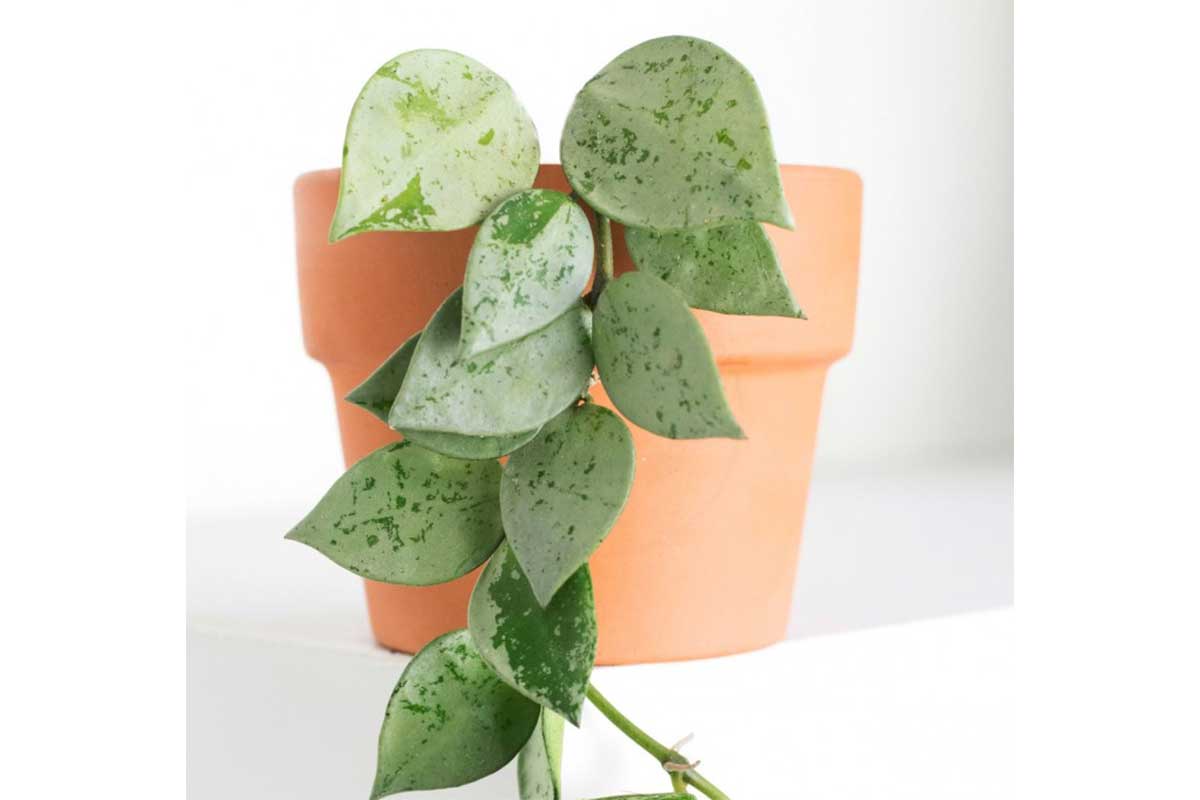
Hoya ‘Eskimo’ looks as though every leaf has passed through silver mist: green is often reduced to fine lines, margins and veins while bright splashing dominates and catches the light. Small waxy blades form an elegant cascade that looks exceptional on a high shelf, in a hanging display or against a dark wall. It is a collectable Hoya with dramatic colour that still retains the light detail of its tiny foliage.
Every leaf distributes silver differently, creating a living surface that never repeats. Beside matte charcoal, deep green or warm wood, the cool sheen becomes clearer and turns even a small arrangement into a focal point for anyone drawn to distinctive Hoyas.
A high proportion of silver surface completely changes the look of the small waxy leaf.
Fine stems carry small blades at close intervals, creating a flexible cascade.
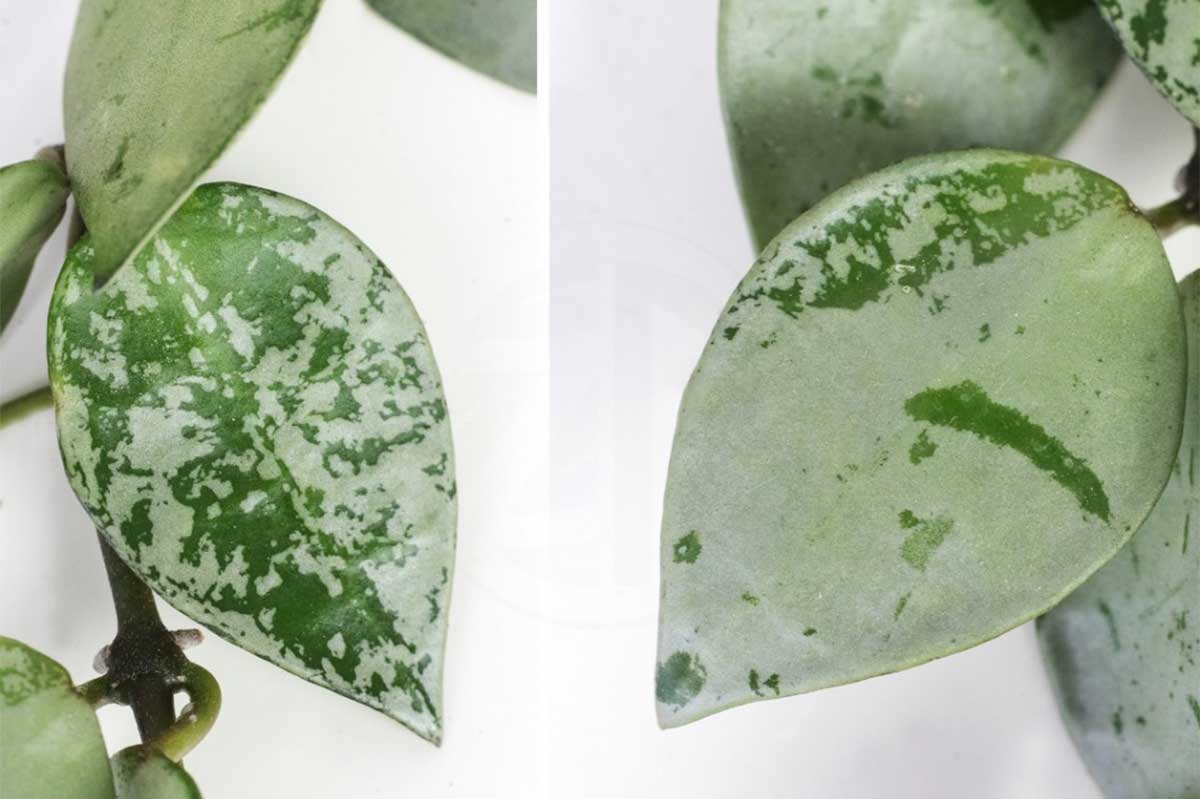
Silver zones cover much of the blade, leaving a green network and irregular margin.
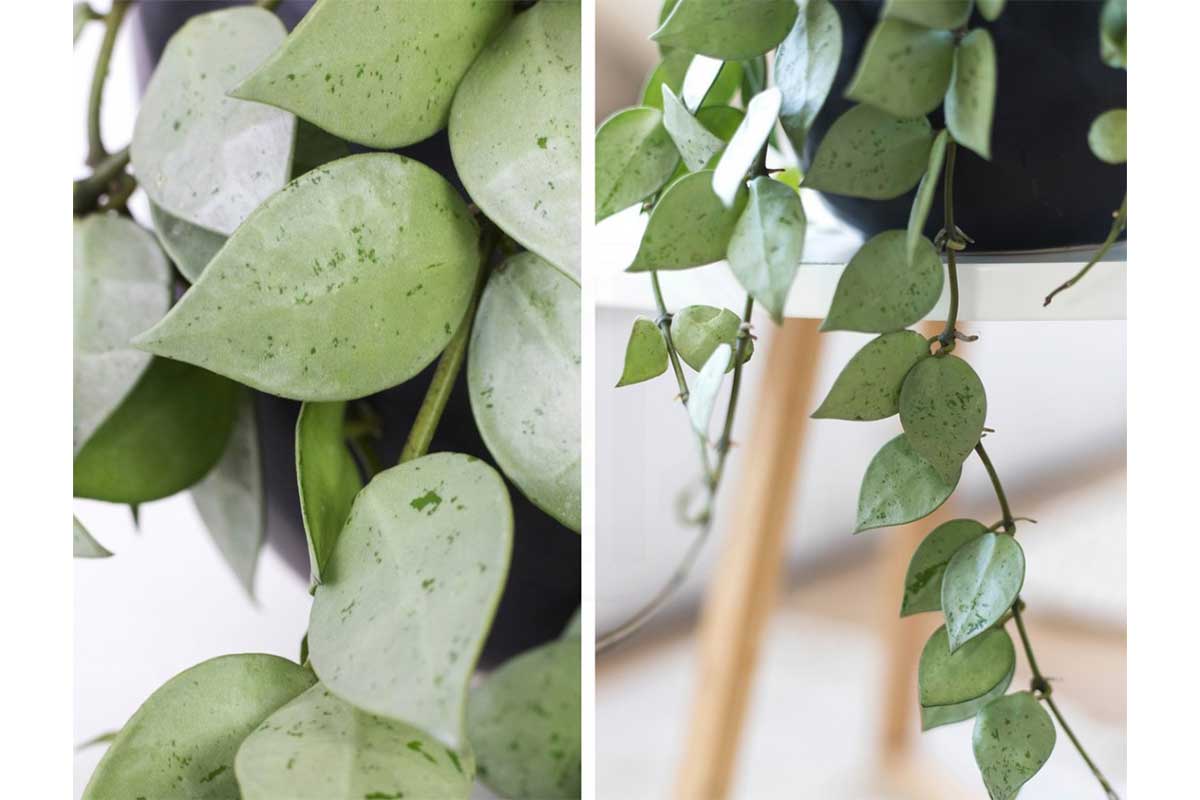
The thick smooth surface remains waxy and firm beneath the bright pattern.
Why you’ll love it: it brings an exceptionally bright silver look to an elegant tiny-leaved trail, with a unique pattern on every blade.
On a high shelf or in a hanging pot where the stems can fall freely and receive even light. A small turn every few weeks keeps the silhouette balanced.
Choices with compatible light needs and contrasting textures keep the arrangement balanced.
Plentiful bright indirect light, with gentle morning sun after acclimation.
Water after a substantial part of the mix has dried and allow all excess to escape.
Average to higher humidity, good airflow and roughly 16–28°C, without abrupt changes.
Hoya species are generally considered non-toxic to cats and dogs, but they are not food.
Provide strong filtered light. Gradual exposure to gentle morning or late-afternoon sun can support flowering and colour without scorching.
Check the mix at depth and notice the pot's weight. Water thoroughly once it has dried sufficiently and never leave water standing at the base.
Maintain average to higher humidity together with gentle airflow. Stagnant, very humid air increases the risk of spotting and damage.
Most Hoya species perform well at roughly 16–28°C. Protect foliage from cold glass, chilly draughts and direct heat.
Use the specialised Hoya mix with a coarse, porous structure. Repot only after roots have genuinely filled the pot.
During active growth use Nutri One according to the label and only on already moist mix. Reduce or pause when growth slows.
‘Eskimo’ is a horticultural name used for a heavily silver-splashed Hoya at genus level.
In cultivation it is often linked with Hoya krohniana, although the exact identity may vary among cultivated clones.
Hoya krohniana is an accepted Philippine species, but the species range alone does not prove the origin of the ‘Eskimo’ selection.
From natural habitat to care: The epiphytic character of the genus explains the need for porous roots, clean airflow and a moisture cycle without permanent saturation.
Microscopic differences in surface tissues trap and reflect light, creating a silver appearance.
Green zones contain more visible chlorophyll and form the characteristic netted pattern.
Each healthy node can produce new growth or roots, allowing clonal propagation.
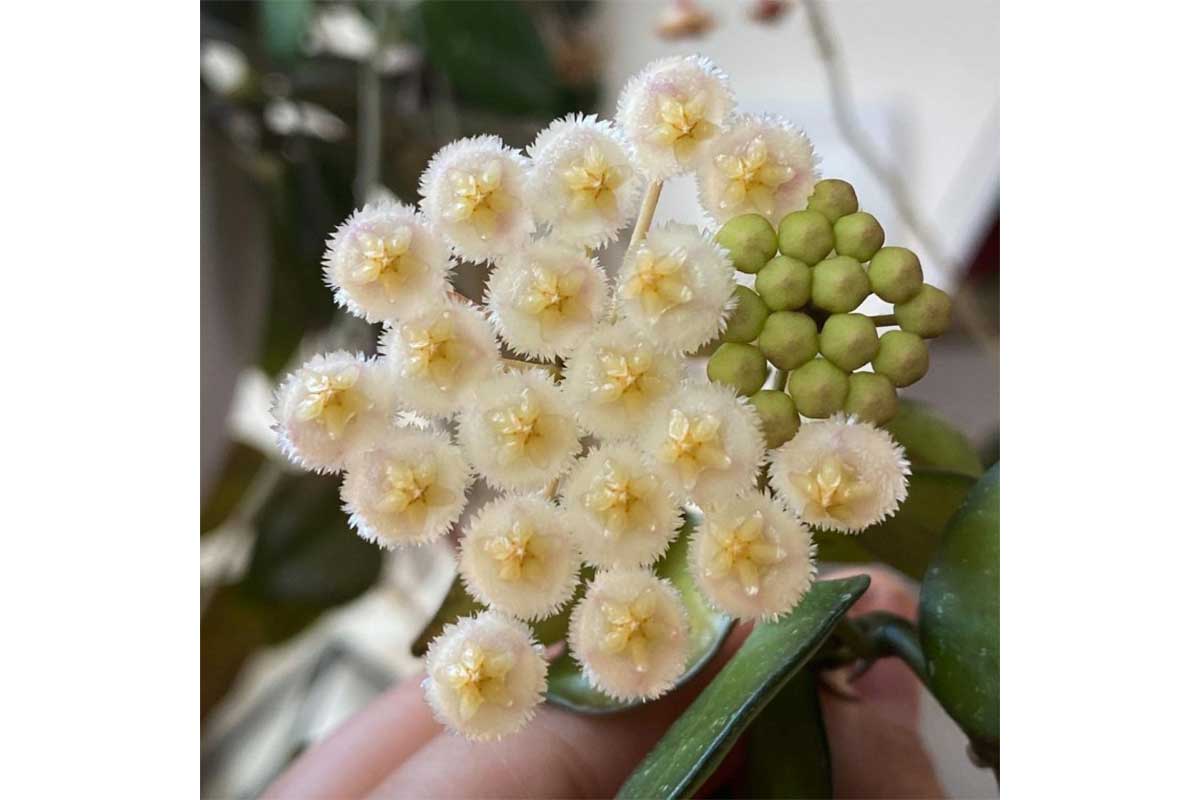
Hoyas can flower again from the same healthy spur, so it is not removed after blooming.
Practical answers about growth and the plant’s most common signals.
Silver splashing naturally varies from leaf to leaf. Assess the overall new growth rather than a single blade.
They often show that the plant has used some of its water reserves, but check the mix and roots first. Wrinkled leaves with wet mix may indicate root trouble.
Not while they remain healthy. Many Hoya species flower again from the same permanent spur, so remove only parts that have dried completely.
Common reasons include insufficient light, immature growth, frequent moves or excessive nitrogen feeding. Stabilise conditions first.
When roots fill the pot, the mix has lost its structure or water passes through excessively fast. Move up one size only.
Hoya species are generally considered non-toxic to cats and dogs. Even so, chewing any plant material can upset digestion.
