A clean, almost invisible curve that gives flexible stems the right direction and an attractive shape. The plant remains the focus, growth stays organised, and the pot retains a visually light look.
S · M · LThree sizes
Crystal ClearClear acrylic
U-ShapeGuiding curve
IndoorFor indoor plants
Direction without stealing the spotlight
The curve that organises growth
The Arch Trellis inserts directly into the potting mix and creates a clear path around which stems can be trained. It is especially useful when you want shape and control without a bulky or highly visible frame.
Supports soft, flexible stems without restricting them.
Helps prevent stems from becoming tangled or collapsing.
Keeps leaves and stems away from the surface of the potting mix.
The clear acrylic allows the plant to remain the central feature.
Shape and guidance — not root attachment. The Arch Trellis is ideal for stems that twine, trail or rest against support. If you want aerial roots to attach and the plant to climb vertically, you need a moss pole.
Schematic illustration. Stems are gradually trained around the curve as they grow.
01
Support that fades into the background
The clear acrylic pairs easily with any pot and does not compete with the leaves or the plant’s form.
02
Cleaner growth
Flexible stems follow a defined path instead of falling, tangling or spreading untidily.
03
Grows with the plant
Stems can be repositioned as they grow, and the acrylic is easy to clean for reuse.
S · M · L
Arch Trellis dimensions
Choose according to the available space above the pot, the stem length and how wide you want the curve to appear.
Size
Height
Width
Small (S)
35 cm
7 cm
Medium (M)
40 cm
10.5 cm
Large (L)
45 cm
15.5 cm
The dimensions cover the entire Arch Trellis. Part of both legs is inserted into the potting mix, so the visible height depends on the installation depth.
For better balance: the taller and fuller the plant becomes, the more important a stable pot is. If the whole arrangement leans or the potting mix does not hold the legs securely, additional stabilisation is needed.
The right support for the growth habit
When it fits — and when a moss pole is needed
The choice depends not only on the plant name, but mainly on how you want it to grow.
Best use
Flexible stems that twine or rest against support
Ideal for Hoyas, Pothos, Philodendron, Dioscorea and similar plants when you want to guide the stems around a curve and maintain an organised appearance.
Not a structural system
Not for heavy or self-attaching growth
It does not replace a moss pole or stronger support when the plant needs a surface for aerial roots, has rigid stems or becomes top-heavy.
Arch TrellisFor shape and guidance
The curve organises flexible stems while keeping the support visually discreet.
Moss PoleFor aerial-root attachment
The filling material provides a surface towards which aerial roots can be directed and attached.
Installation is best at an early growth stage. Young, flexible stems can be trained safely and adapt gradually to the curve.
01
Choose the position and direction
Visualise the curve behind or around the plant and check that there is room for future growth.
02
Insert both legs
Press them gently and evenly into the potting mix near the base, avoiding resistance from thick roots.
03
Guide the stem
Follow the plant’s natural direction and wrap or rest the stem against the curve without bending it sharply.
04
Secure loosely where needed
Use optional stem clips or a soft tie. Leave room for thickening and reposition them as the stem grows.
Do not force a mature or rigid stem around a tight curve
If it does not bend naturally, guide it around a wider radius or let it adapt over several stages. Sharp bending can cause damage or breakage.
Clear acrylic
Rigid yet visually light
The clear acrylic provides clean, discreet support, withstands humid indoor conditions and can be reused.
Controlled training
Guides without anchoring
It holds and organises flexible stems, but it is neither a root-attachment surface nor a structural system for particularly heavy plants.
Acrylic care
A clean look with simple maintenance
A little care during cleaning helps the clear trellis remain discreet within the arrangement.
Soft, damp cloth
Gently wipe away dust, soil or water marks without applying heavy pressure.
No abrasive sponges
Avoid abrasive materials that may dull or scratch the surface.
Remove it without twisting
During repotting, pull it gradually upwards instead of pushing the curve sideways.
Included
1 Clear Arch Trellis
One clear acrylic U-shaped trellis in your selected S, M or L size.
Not included
Clips and plant setup
Stem clips or ties, additional anchors, pot, potting mix and plant are sold separately.
When you need root attachment
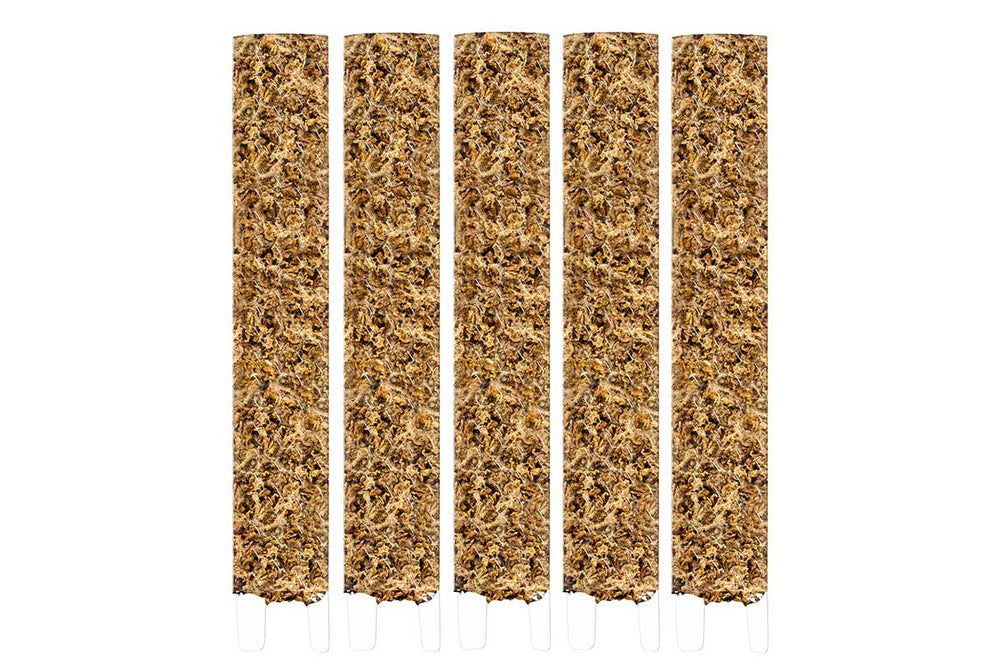
Moss Poles [Classic]
For plants you want to climb vertically and direct aerial roots into sphagnum or another filling material. Crystal Clear Classic poles can be extended as the plant grows.
Frequently asked questions
01Which plants is it suitable for?
It is best suited to plants with flexible stems that twine, trail or need light support, such as Hoyas, Pothos, Philodendron, Dioscorea and similar indoor plants.
02Is it suitable for every climbing plant?
No. It is intended for guiding and shaping flexible stems, not for self-attaching plants that need a surface for aerial roots or for very heavy growth. In those cases, choose a moss pole or stronger structural support.
03Which size should I choose?
Compare the S, M and L height and width with the available space above the pot and the stem length. Remember that part of the legs will be inserted into the potting mix.
04When is the best time to install it?
Early, while the stems are still young and flexible. This lets them follow the curve gradually without sharp bending or pressure.
05Are clips always required?
Not always. A naturally twining stem may hold itself in place, but optional stem clips or a soft tie help create a neater setup and make it easier to adjust the stem’s path.
06Can it be used outdoors?
The Arch Trellis is designed for indoor plants. For permanent outdoor use, choose a support specifically made for exposure to sun, changing weather and wind.
07How should it be cleaned?
Wipe it gently with a clean, soft, damp cloth. Avoid rough sponges or abrasive materials that can scratch or dull the clear acrylic.